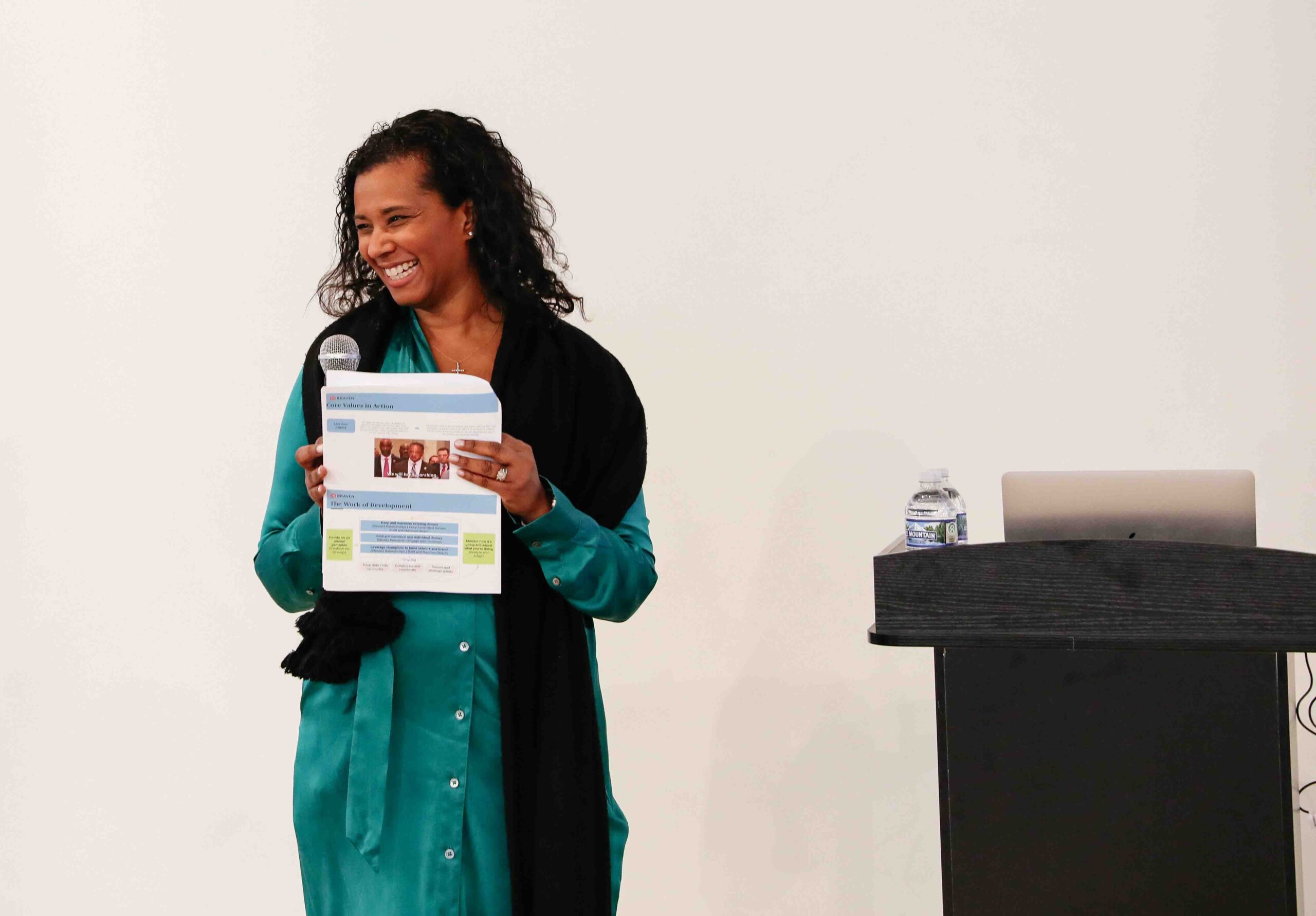
The Leaders of Color Collective (LoCC) recently welcomed Aimée Eubanks Davis from Braven to talk about turning $5,000 gifts into $500,000 gifts.
As always, the LoCC event started with the opportunity for Chicagoland nonprofit leaders of color to network over food and drinks. At each event, leaders make new connections, with a majority of people reporting they plan to follow up with the people they met after the event. This remains a necessary facet of LoCC programming, since leaders of color often feel isolated in their positions.
The discussion was moderated by Jamyle Cannon, Executive Director of The Bloc, who started with a question: what have attendees’ experiences been with receiving grants, and how large or small are their gifts? The attendees shared an interesting through-line: their most significant fundraising came from the personal connections that leaders cultivated with individual funders. Grants were cited as the vehicle, but the relationships were the method.
Unbeknownst to those who shared, participants created a perfect segue into Davis’s central talking point: donors fund organizations based on their relationships.
Through various examples of relationship-building that grew Braven into a nearly $50 million organization, Davis highlighted several strategies to deepen connections with current and prospective philanthropic supporters:
- Ask networks for connections
- Prepare for meeting potential supporters
- Develop a clear narrative of what you do
- Create a strategic communications plan
Organizations need to find their champions or, in other words, people who will spread the word and bring in more connections. An organization’s initial network does not have to be individuals capable of donating large gifts; board members, staff members, and community supporters can leverage their respective networks to find more major donors.
Once nonprofit leaders secure the chance to meet face-to-face with prospective new funders, it is imperative they carefully research their audience. That research can include their interests, various people in their personal spheres, personal motivations, and most importantly, what matters to them.
The next step is to have a clearly communicable picture of the what, how and why. Nonprofit leaders should be ready to succinctly share their organization’s purpose, plan and impact, and how that connects to the individual. Why does your work matter to this donor? What connections can you make to their personal values? Through a sense of inquiry and curiosity, leaders can better acquaint themselves with the history of potential donors and highlight their shared goals.
Ultra-wealthy individuals donate their money because it is in their best financial interest to do so, but they want to make sure their investment is having a significant impact. While nonprofit leaders can talk to their staff and participants to gauge their success, donors don’t have that access. It is incumbent on leaders to consistently connect with donors and stakeholders of all types to share their impact and progress. For organizations like Braven, that means multiple touchpoint with the organization’s work, such as impact report mailings, connection events, and individual or group meetings. A sense of belonging in a movement to make change goes a long way.
Conclusion
While her presentation included concrete steps for attendees, Aimée Eubanks Davis ultimately shared the outline for a mindset shift. Fundraising and philanthropic support are not passive or sporadic aspects of leading. They are active, ongoing practices that need consistent attention and strategic planning. Leaders must understand that funding the work of an organization is a top priority —alongside programming and organization management, not beneath it. Furthermore, fundraising must go beyond applications to open calls; a more concerted plan to utilize board and community networks to make connections to potential supporters is essential.
Written by Jessica Jones-Lewis.