
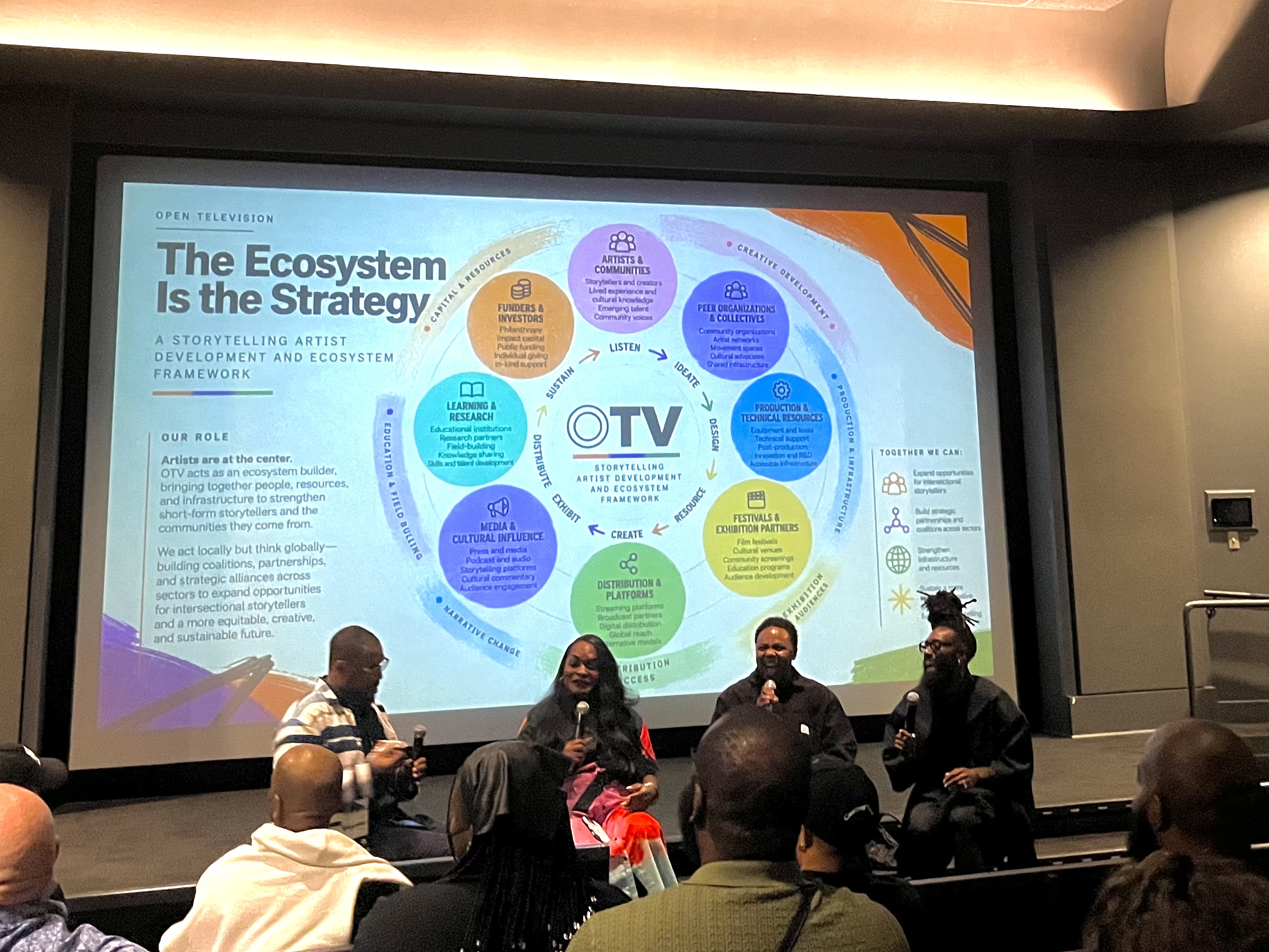
A conversation about building Black trans-led creative ecosystems at GIA.
On October 18-21, 2026, the Reva and David Logan Foundation sent three staff members to the Grantmakers in the Arts’ annual conference. The conference, titled “As the South Goes…” (W.E.B. DuBois), took place in Memphis, Tennessee. One of the South’s Mississippi River cities, Memphis, known as the home of Blues and Rock N Roll, has been pivotal in shaping not only the nation’s music but its social movements as well.
This year’s conference was a unique opportunity to showcase how cultural infrastructure is built and sustained under uneven conditions, and how value moves through sound, migration, ownership, and narrative. Across plenaries, conversations with arts leaders and funders, and visits to cultural organizations throughout Memphis, attendees saw a thriving southern city that continues to model what it means to build a movement toward an abundant arts ecosystem. Here are the reflections from our staff members.
Jessie Mott, Senior Program Officer:
Throughout the conference, I was reminded that a thriving arts ecosystem requires more than funding individual projects. It requires the support of infrastructure that allows artists, organizations, and communities to build relationships, take risks, develop leadership, and sustain their work over time. Changing the conditions that make collective work possible. What if we treated relationships as essential infrastructure rather than a byproduct of our work?
At the National Civil Rights Museum, the conversation about building Black trans-led creative ecosystems brought these ideas into particular focus. The discussion with Elijah McKinnon, Imara Jones, and Joie Shakur connected cultural infrastructure to questions of safety, representation, data sovereignty, and the power of storytelling. In a context where violence is reinforced by dehumanization, art and media can help restore humanity, create connection, and make other futures imaginable. The idea that the ecosystem is the strategy stayed with me.
Jessica Jones-Lewis, Program Officer:
One of the central lessons I took away from the conference was developing a clearer vision for arts in and as place. In learning more about Crosstown Concourse, previously a Sears Distribution Center, it is clear that while creating/repurposing a new space for the arts is important, it also needs to be accessible for the community. These spaces cannot be conceived of or built in a vacuum.
At showtime, arts organizations welcome the community into their performance venue. But once the show ends, what else does the community get from the space? Can they get a community meeting space? A place for indoor artist or farmers markets during inclement weather? Can alderpeople, politicians or guest speakers use the space for community events? Can schools host performances on the same stages as Chicago’s best artists? Can some of Chicago’s most vulnerable community members find a cooling station in the heat or a warming station in the biting cold? In short, what do our buildings do when the show is over? How could more community invitations result in more resilient communities and more resilient arts spaces?
Sabrina Boggs, Senior Administrator:
The term “middle-class artists” came up on the first day and really stuck with me. In regards to an artist’s career, “middle-class” might imply they are in between early-career and “Beyoncé.” Broadly, however, “middle-class” implies an ability to live comfortably with room for hobby and pleasure. This type of financial stability is most often out of reach for professional working artists.
Despite being massively undervalued, these artists are the pipeline that create Beyoncé. They are her first vocal coach; they are the marching band that inspired her Homecoming tour. Deeply rooted in their communities, they often have the highest touch and highest impact on the next generation of artists and our world in general. They deserve to be middle-class and, beyond that, to create generational wealth. Instead, many of them cobble together multiple jobs to make ends meet, with no health benefits or retirement savings.
Unfortunately, funders continue to struggle with how to get artists’ basic needs met. Some funders struggle to pay them at all. In speaking with an anonymous funder at the conference, I learned that they have advocated every year to pay visiting artists a $20 stipend for their large-scale public arts festival, and every year their board ultimately offered artists no compensation. How do we convince arts funders that artists deserve to be paid more than the absolute bare minimum, or even paid at all?
Or does it transcend what funders can or are willing to do? Does the answer instead lie in artists creating their own infrastructure, mutual aid, and ownership? If so, how can we help them get to that point?
_______________________________________________________________________________
Despite sending our staff home with more questions than answers, the 2026 GIA Conference provided an opportunity to deeply reflect on the arts beyond what is produced, centering the people and places that make the arts and artists possible. Memphis showed that “The South Got Something to Say!”
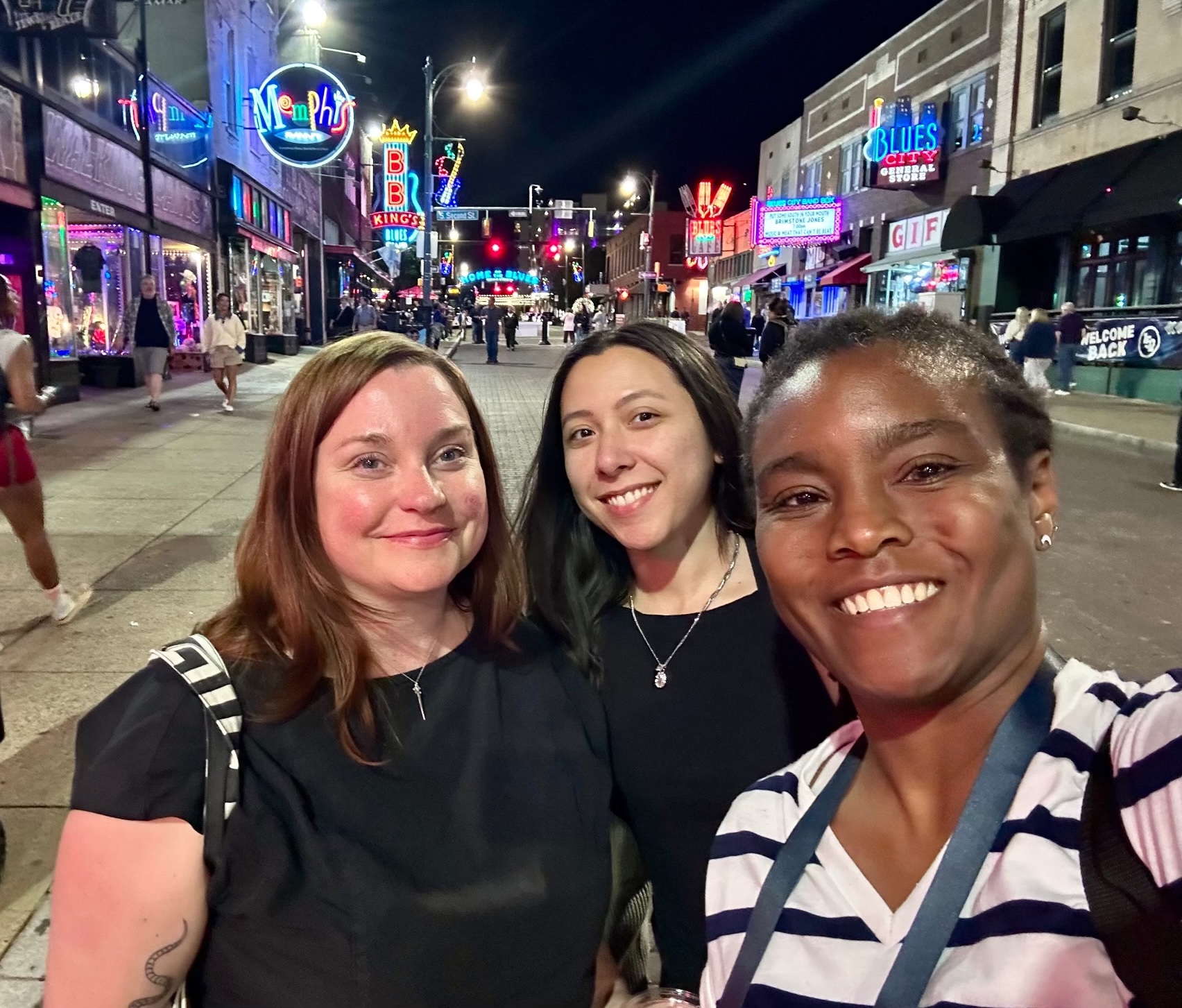
Staff members Jessie Mott, Sabrina Boggs, and Jessica Jones-Lewis on Beale Street.